
ROLEPLAY GUIDE: STOKADI
BUILD NOTES | FROM THE DEVS | SPOTLIGHT | NEWS/PRESS | LORE
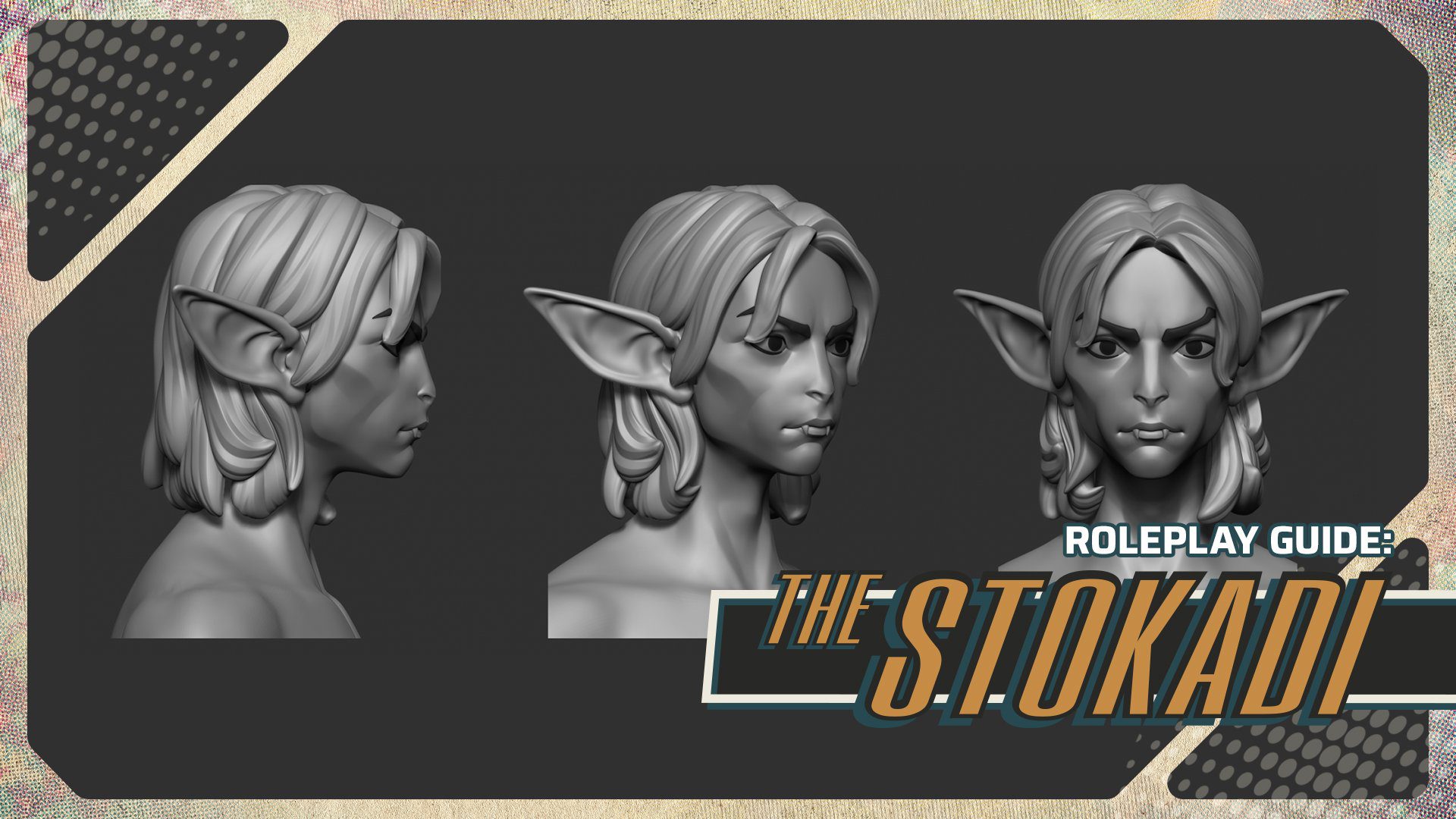
STOKADI PHYSICAL DESCRIPTION
Stokadi look like they crawled out of a foggy night club that also happens to be a court of law: vampire/goth/emo-coded, with a deliberately moody silhouette. The signature look is dramatic outerwear—cloaks, high collars, veils/hoods—often covering at least one eye and much of the face, so even a friendly Stokadi can read intimidating at first glance. If you want to sell it in emotes: stillness, slow head turns, long pauses before speaking, and “I’m tired of the world, but I’m still paying attention” energy.
HOME PLANET, HISTORY, AND CULTURE
They’re from Revenia, a world that’s basically cold, wet, and foggy most of the year, with little sun, mountain ranges, and plateaus—so the whole civilization grew up under a permanent grey ceiling. That shaped their core cultural obsession: fairness. Revenia’s history includes rural clan/tribal communities and plateau city-state oligarchies that amassed resources over time; modern Stokadi carry a strong “we’ve seen what unfair systems do” instinct, and they’ll argue process and equity like it’s a survival skill. They also have some very specific cultural flavor: they’re famously meat-forward (lab-grown meat became a big deal), BBQ/smoker grilling is a whole export, and their fashion has a dark sense of humor—moody gloomwear with flashes of bright optimism like “fine, tomorrow will be better and I’m wearing it on my sleeve.”
LANGUAGE: SHA’RENI, AND HOW TO “SOUND LIKE ONE”
Stokadi speak Sha’reni. You don’t need to learn it—just steal the vibe: Sha’reni sounds soft and sibilant (lots of sh / s), with open vowels, and Stokadi often speak as if they’re keeping emotional control on purpose. The #1 “sound Stokadi” trick is to make fairness/balance your verbal tic—Stokadi will say things like “on fair terms” and “in balance” the way other species say “cool” or “sure.” In English RP, keep your sentences measured and precise, and when you want to drop a Sha’reni word, use serin (their fairness/balance concept) as a little stamp of identity.
NAMING YOUR AVATAR
To make a Stokadi name feel right, aim for smooth-but-gloomy: lots of sh and soft s sounds, and avoid chunky “k/kr/gr” piles (those read more Gertan/Skwatchi). Stokadi names often feel like two elegant chunks that could plausibly mean something (fog/night/ridge/virtue/bond/clan), and they tend to look good written with repeated sibilants: think shapes like Shasoree Day, Thorashah Melsoo, Kashas Sharvee, Menshes Lortie, Vorsha Versoosh, Nasah Prashereen. If it feels like you could whisper it in a cathedral hallway and it would still sound cool, you’re doing it right.
ROLEPLAY TIPS FOR PLAYING A STOKADI
- Default to “fair terms.” Even when you’re being friendly, you’re quietly tracking equity and obligation.
- Be calm, not warm. Stokadi friendliness tends to be controlled and deliberate, not bubbly.
- Argue systems, not vibes. Who’s responsible? What’s the precedent? What’s the balanced outcome?
- Use dark humor as armor. Gloom is home—complain poetically, then solve the problem.
- Dress like the weather hates you. Cloaks/hoods/veils, severe silhouettes, then a weird bright accent as a joke.
- Treat promises like bonds. If you say you’ll do it, you mean it—and you’ll remember when others don’t.
STOKADI PHRASEBOOK
- Hello / Hey: Naroh tas.
- Goodbye: Tawa serin.
- Yes: Ve.
- No: Nay.
- Maybe: Zorel.
- I don’t know: Mi shari nai-le.
- I understand: Mi shari-le.
- I mean no harm: Mi ti dashi nai-va.
- I need help: Mi zada tali-le. (“I request aid.”)
- Follow me: Korsa mi.
- Wait here: Ti luma-le lo.
- It’s dangerous here: Lo vorsa-le.
- Stop!: Tawa nai!
- Run!: Tawa vorsa!
- I want to trade: Mi zava-va.
- That’s acceptable / OK: Shoni serinvee.
“Curses” you can actually use (attested words, used as expletives)
- “Unfair!” / “Not fair!”: Naiserin!
- “Failure!” / “Breakdown!”: Korunnai!
- “Void!” (big dramatic swear): Vau-nai!
RELATED POSTS

