

-
SCOUTING ALIEN WORLDS
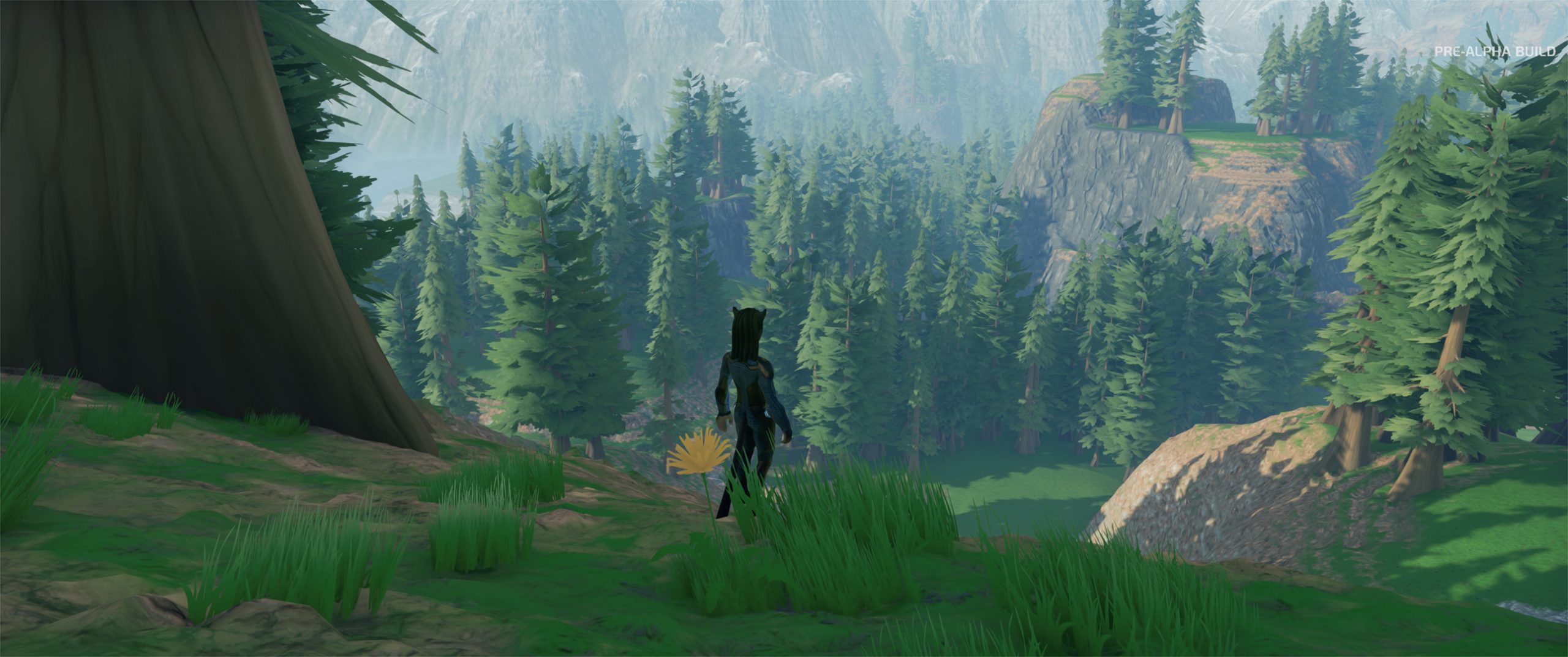 Exploring the deep dark deadly woods…
If you read our last blog post, you heard about the features we plan to test this weekend.
To date, we have been unlocking only specific features in each test, and trying them out in isolation, rather than letting testers play with all the systems we have done work on. Probably most notably, testers have had combat used on them, but they haven't been able to really fight back with weapons yet.
That's because until now, we have been doing mostly scalability and stability testing. Testing features in isolation lets us measure their performance more accurately, and reduces the number of variables as we isolate issues. This lets us iterate on them as quickly as possible.
But now that we have a good sense of what to tackle on the performance side, we're ready to start letting players try out gameplay features! This time around, we are going to have more than one game system turned on, so that we can start to test out how they interlock.
In Sterne Reichweite, each gameplay system is dependent on others in various ways, so we have to plan carefully what we turn on at each test.
As one example of that, crafting was mostly not available in the earlier tests, but we did give players the Paver tool. Normally, that would have required skills from the Civil Engineering profession. To enable the test of world manipulation without dragging in all of crafting, we just made it so that you didn't need to actually craft paving stones or pavement, and instead just spawned the pavement directly in the world. The paving also all came from just one material, even though in the actual game you'd need to harvest the right materials to make a given pavement type.
This time, testers are going to try out a pretty important pair of systems, one oriented around exploration, and the other, excitingly, combat.
BEING A RANGER
Remember, Sterne Reichweite does not have classes. Instead, you can start learning any given skill tree, which we call a profession. Sometimes, one profession unlocks another. This means changing our mindset a little bit when we design special abilities.
As developers, we might have a natural inclination to say "learning knives plays well with stealth abilities, so I'm going to put some stealth powers in the knives skill tree." In a system like ours, it's better to think of stealth as a profession in its own right, that might pair up with knives, but also might pair up with mining, botany, or xenobiology because players want to avoid combat while hunting for rare samples.
We end up grouping together these "ways to play" into the professions, and testers are going to get to try out two parts of the overall Ranger tree in the test this weekend.
Rangering is big! It's actually made up of five separate professions arranged like this diagram. Each of these bubbles specializes into different activities.
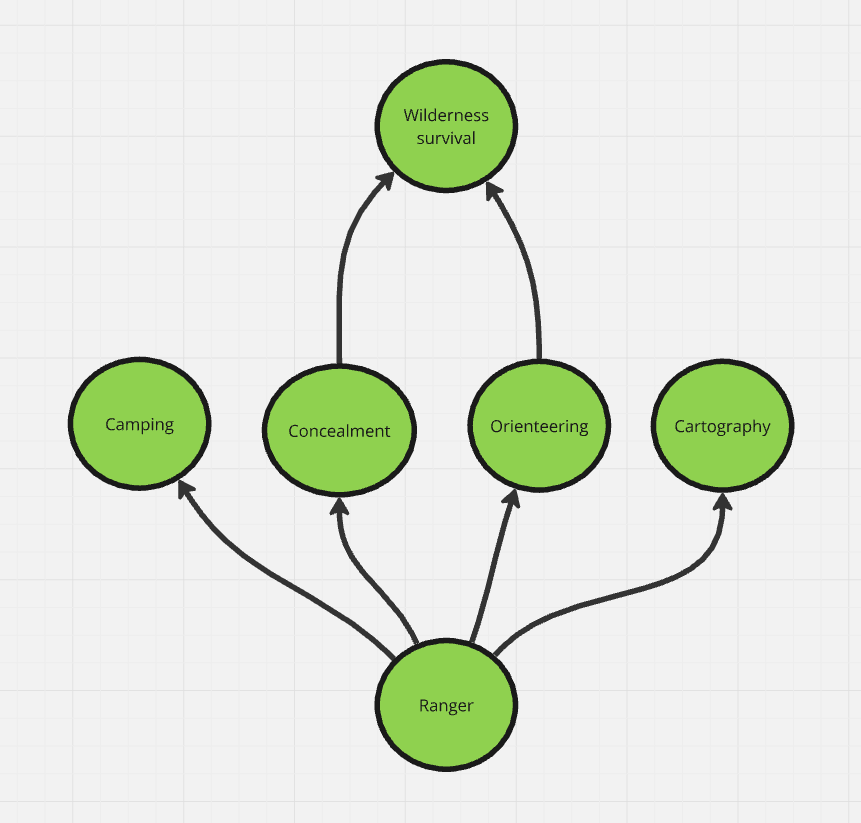 Ranger Figure 1.
The base skill to start out as a Ranger offers up just one ability: marking waypoints. This is a basic navigation aid that helps you navigate the world. You have a datapad where you can collect these waypoints, and eventually trade them with others.
From that basic ability, you then branch out.
- If you want to keep exploring what is possible with waypoints, you will want to head toward surveying and cartography. You can learn how to have more and more waypoints, how to set them from a distance, how to collect survey points in the world and craft planetary maps, and more. In Sterne Reichweite, you do not have a minimap until you make one, or obtain one from someone who has crafted one!
- Orienteering is more about learning to hike and navigate. Until now, everyone has had the ability to fly with the gravmesh, and to use grappling. Everyone has been slowed down the same amount by slopes and everyone was equally good at climbing sheer cliffs. This profession is all about unlocking these things and about getting better at them. Hanging on a cliff is going to cost stamina, until you learn how to use pitons, for example.
- Camping is about the ability to create forward bases. In SR, when you die, you pop back to the last save point – a ReLife Station. Rangers who know camping can create these camps and they automatically come with a ReLife Station. Otherwise, you'll be rewinding back to the start point on the planet. Camps also can have crafting stations and defenses, and they count as a "safe area" for the purposes of healing wounds and using entertainment skills.
- Being sneaky is fun, of course. Learning how to mask your scent from roving creatures, how to hide and sneak about, and even engage in sneak attacks for extra damage regardless of which weapon you use – these are all the province of the Concealment profession.
- Lastly, there's an advanced profession for truly hardcore explorers. Someone adept at Wilderness Survival can train building up heat and cold resistances for extreme weather and climates, can learn how to resist poisons, and so on.
ENOUGH PROFESSIONS, WHAT ABOUT SKILLS?
Even this diagram does not show the systems in real detail. You don't need to master both Concealment and Orienteering to unlock Wilderness Survival. Professions can be unlocked and branch off midway through a tree.
In fact, even though I am about to share what the trees currently look like with you here, I'll warn you that we expect to add, drop, and rearrange skills from these as a result of testing. Our skill system is very data-driven and it's easy for us to do that, so we will take advantage of that capability to keep iterating! So don't rely on this diagram much! 🙂
 Ranger figure 2
Some things you might notice about this: bolded circles unlock an ability, like a new special move, or a new passive ability. Ones with the thinner ring are generally about making stats on the ability better. So once you unlock camping, you can make camps of larger size or duration by earning your way further up those progression tracks. We've currently settled on around three upgrade tiers as a number that felt good in terms of each new box feeling really consequential.
These trees can also crosslink into other professions. And dotted ones are ones that we aren't quite ready to talk about or promise yet. Lastly, there are master skills that "sum up" a portion of the tree and can grant titles to players.
IN THIS UPCOMING TEST
Players in the next test will only be playing with camping and some amount of surveying. And surveying is not all of the Cartography tree this time. We're still keeping to the plan of unlocking features a bit at a time. The goal is for each player to try mapping the planet – no sharing of survey points yet. If you had guessed by now that this test is also about evaluating Exploration as a playstyle of its own, you're right! That's exactly what we hope to do here.
Players will notice that some of the abilities they've gotten used to seeing on other tools have moved around. Being able to clearcut underbrush like a machete, use a low-powered flamethrower, and freeze a path across liquid or hot terrain are things that a Ranger needs to do; previously, some of this capability was on a generic Agitator tool. Our goal is that abilities like that fall into the professions where they make sense. You won't find the flamethrower melting any rock, for example. It's just not that hot.
Camping enters the picture because you will find you probably want camps in order to succeed at mapping the planet. Get used to dying, because the creatures in this test are aggressive and fairly tough. Most of the camping skills are present.
Similarly, in this test we are going to let players experience combat. Combat has plenty of work left to do on it, especially around client prediction and networking. But this test is all about mapping a dangerous planet. We figured, you need a chance to fight back. Please don't judge this as the final form of combat – though it should give you a decent taste of the action-oriented arcadey feel we are going for.
All in all, this should feel like "a game" more than previous tests. You have a clear goal: map the world. The world is resisting. Can't wait to see how it goes!
Want to help shape the future of Sterne Reichweite? Register now to join our playtest pool! While signing up doesn't guarantee an invite to the next playtest, you'll be in the queue for future opportunities to experience new features and gameplay. Be among the first to explore, fight, and influence the game's direction. [Sign up here]!
-
EXTERNAL PLAYTEST PREVIEW – OCT. 19, 2024

In the last test we ran on Oct 2, we let players rip up the world, experimenting with a ton of world manipulation tools.
This next test, we're going a completely different direction, removing all of those terrain deformation capabilities and concentrating instead on some of our core game loops: combat, progression and (just a bit of) crafting.
This one is a complete change of pace.
Players are Rangers that have landed on a world deep within a dense pine forest on a twilit planet. They'll each have a basic weapon (Omniblaster), a survey tool, and a ranger tool. Their objectives will be to a) survive, and b) complete a survey of the entire planet.
With that, they'll venture out into the forest…and those woods will be fraught with peril. Creatures abound within the forest, and most of them are more than a match for a single player.
"It's dangerous to go alone." There will be deaths!

New features for this test:
-
- Combat: Players start with just a single weapon, the Omniblaster, but there are ways to gain others as they adventure. Some notes:
- This is a long way from the final form of combat. This is an early test.
- Weapons are not yet client-predicted, so you'll see some lag effects, depending on the latency of your connection.
- Creatures: There are six types of creatures on the map: Deer, Jackalopes, Skysharks, Ballhogs, Owldeer, and Ballhives. They all have differing characteristics and behaviors, they drop different types of loot, and they are varying degrees of risk. Their AI is still somewhat basic, but they have some nasty surprises in store for players.
- Skill Trees: The first basic skill trees are in the game, allowing players to advance as Rangers, gaining XP and advancing along the Scout and Surveyor skill tree branches.
- Scout: This tree branch uses the Ranger Tool and is all about forward base camps. As you unlock nodes you'll be able to establish larger and more elaborate base camps for your friends to use that include ReLife stations and crafting stations including the Stove, Toolmaker, and Lathe. Additionally, the Ranger Tool lets you use a flamethrower to burn away underbrush (and trees) and a freezing tool that you can use to bridge waterways…and put out fires.
- Surveyor: This tree branch explores setting waypoints and gathering nav nodes from the world, allowing you to (eventually) map a planet's surface and make that information available to other players. For now, it's a simplified version letting you map the nav node network for the planet and succeed in your mission.
- Combat: Players start with just a single weapon, the Omniblaster, but there are ways to gain others as they adventure. Some notes:
- Crafting: You can use the Stove (once you gain access) to create consumables to restore stats while you fight, and there may be a few things you can do with the other stations also…if we have time to sneak in some other stuff before the test.
- Flora Burning: Only you can prevent forest fires. But you can also start them. Be warned…fire spreads!
Additionally, there's a host of bug fixes from previous tests (including better support for AMD video cards and fewer crashes) as well as performance improvements.
We're really looking forward to players trying these new systems and continuing to grow the game beyond. Soon!
Want to Join the Next Playtest?
-
-
OCTOBER 2ND PLAYTEST RECAP

CREATIVE CHAOS, PLAYER FEEDBACK, AND EPIC MOMENTS WITH NEW VOXEL TOOLS
By Dave Georgeson
We recently ran a wild-and-wooly external test where we gave our players a whole host of voxel manipulation tools and absolutely no guardrails. The ensuing chaos was both a) enormously entertaining, and b) extremely valuable feedback on both performance and giving us indications of what the players would do with that level of power.
We gave our players six different tools they hadn't used previously:
-
- Extractor: A mining cannon that's used to dig through soil and stone, extracting minerals and making tunnels.
- Agitator: A device that can apply enormous heat or cold to different areas so that players can melt stone, freeze water, and everything in between.
- Terraformer: This tool lets you place any material you've gathered (usually with the Extractor) back into the world. You can select from the materials in your inventory and sculpt away to your heart's content. (Especially in conjunction with careful application of the extractor.)
- Chronophaser: This beam weapon allows you to increase, or even reverse, entropy so that materials either break down into their components (as they would with erosion) or merge back together into fewer elements (like lithification).
- Paver: Use materials you've gathered to pave areas and make parking lots or roads.
- Block Tool: We let testers experiment with a very rough, brand-new feature, allowing them to build with materials similar to what's available in the world. This was still VERY early in development, but the players were able to do a lot with it anyway.
Then we turned 100 players loose on a 1k x 1k test map for two hours…and watched. No rules. Just mayhem.
It was spectacular.
As expected, the Agitator was enormously popular right away. It was no surprise that melting and freezing things is fun stuff. But the other tools were all attractive in their own ways and a bunch of stuff happened all at once.
- Players created enormous lava flows, melting entire sides of mountains to create immense "dragon spines" of melted and re-solidified rock.
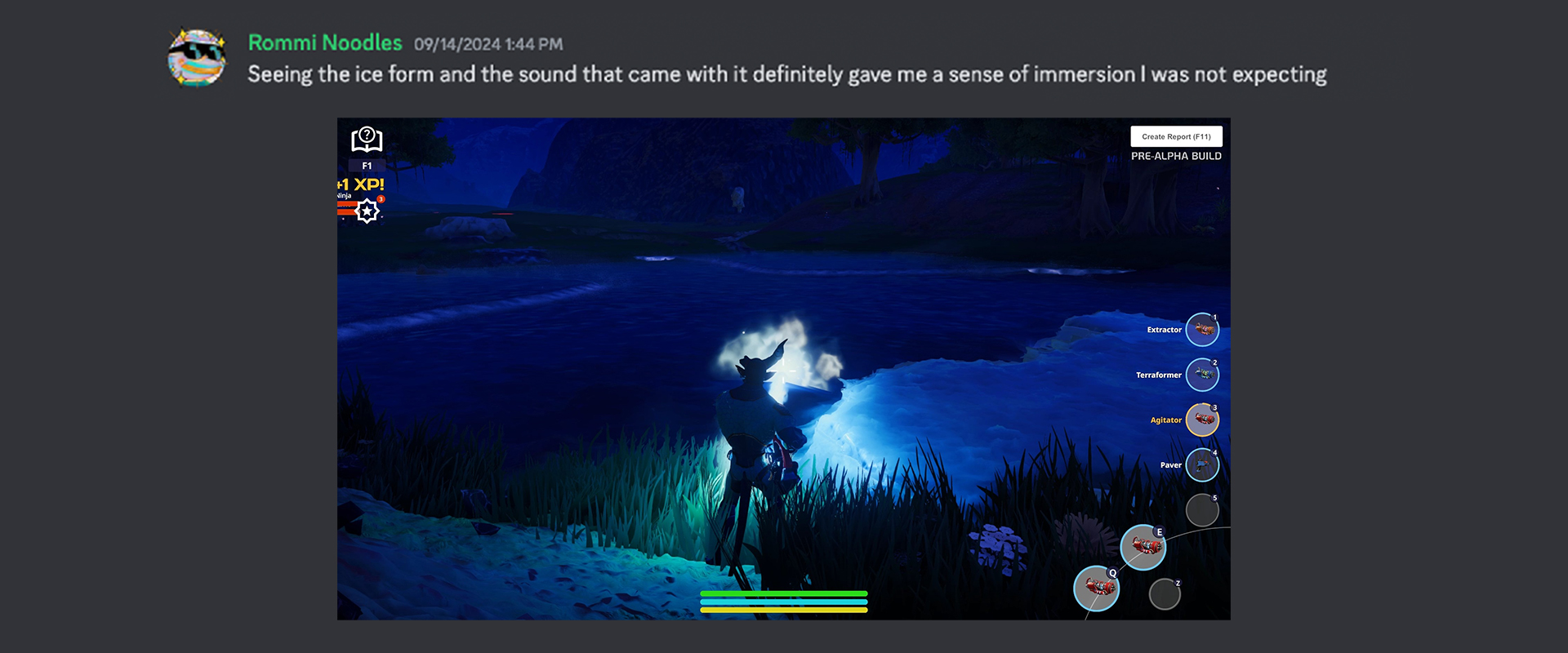
- They froze huge sections of lake, making impromptu ice skating parks and playing on them extensively.
- A small group immediately began working to undermine an entire hill, just to see it eventually cave in on itself…which ended up killing everyone in the immediate area.
- One group went underwater and dug a vertical shaft down into the bedrock, eventually draining part of the lake into the lava mantle far below, which flashed the water into steam, creating a geyser that rushed back up the tunnel and so high into the sky that the cold there started freezing it and dropping ice chunks back down to the ground, killing anyone that was under them.
- Another player dug a shaft down below the lake, creating a drain for lake water. They then froze the resulting whirlpool that occurred, creating an ice funnel they could slide down and up, flinging them into the sky.
People didn't spend a bunch of time making roads (that'll probably be more popular as we start allowing persistent building efforts), but they did take the really rough Block Tool and start experimenting with it, making crude log cabins and many signs (including our own game logos).
They built bridges across the sky, set each other on fire, froze one another in place, and generally had a great time. In the process, they absolutely wrecked a world in short order.
The Ancient Gaming Noob wrote up more detailed reports of how the test went! Links to his articles are posted below:
Scenes from a Stars Reach New Tools Playtest
Stars Reach and the Terrain Modification Playtest
And here's some pics from the test, below:
 A ravaged map after a two-hour test
 Players building structures and then melting them with judicious application of heat beams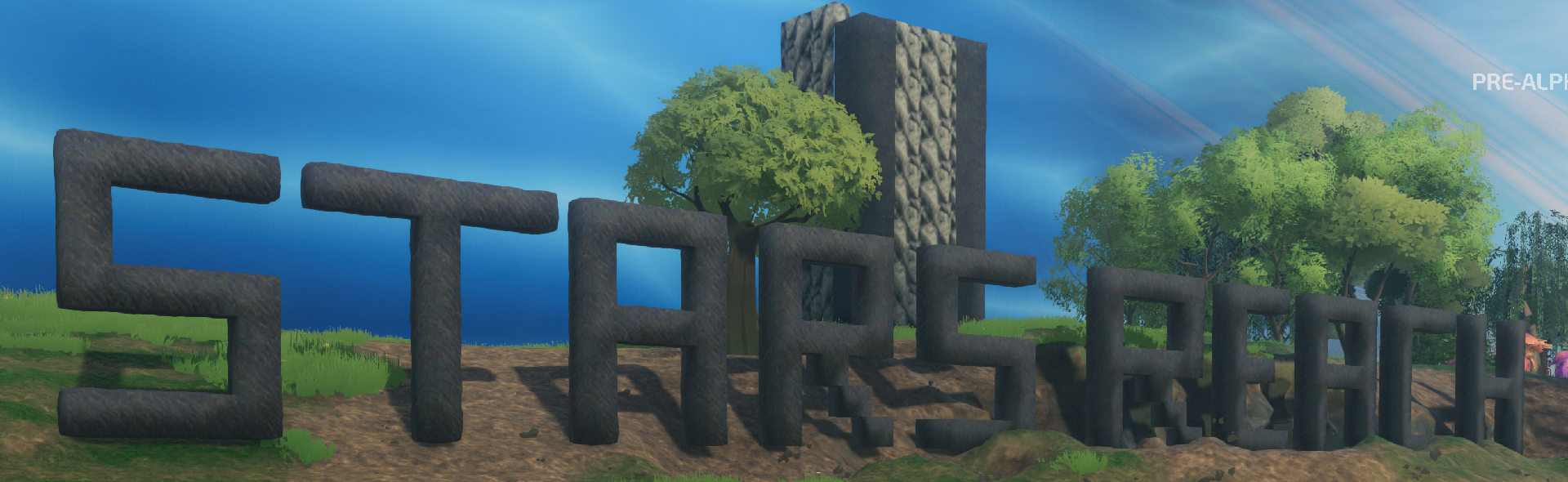
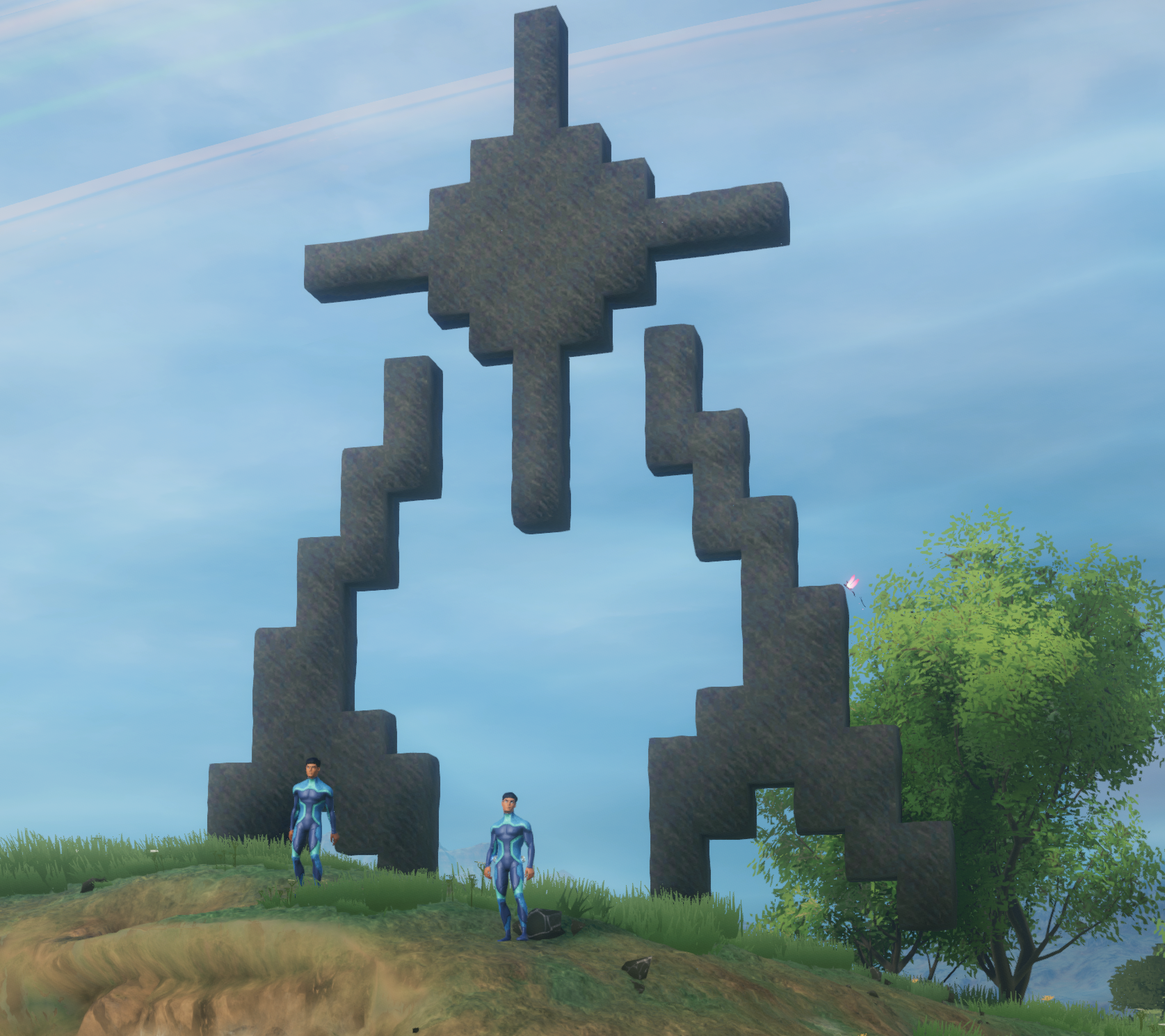

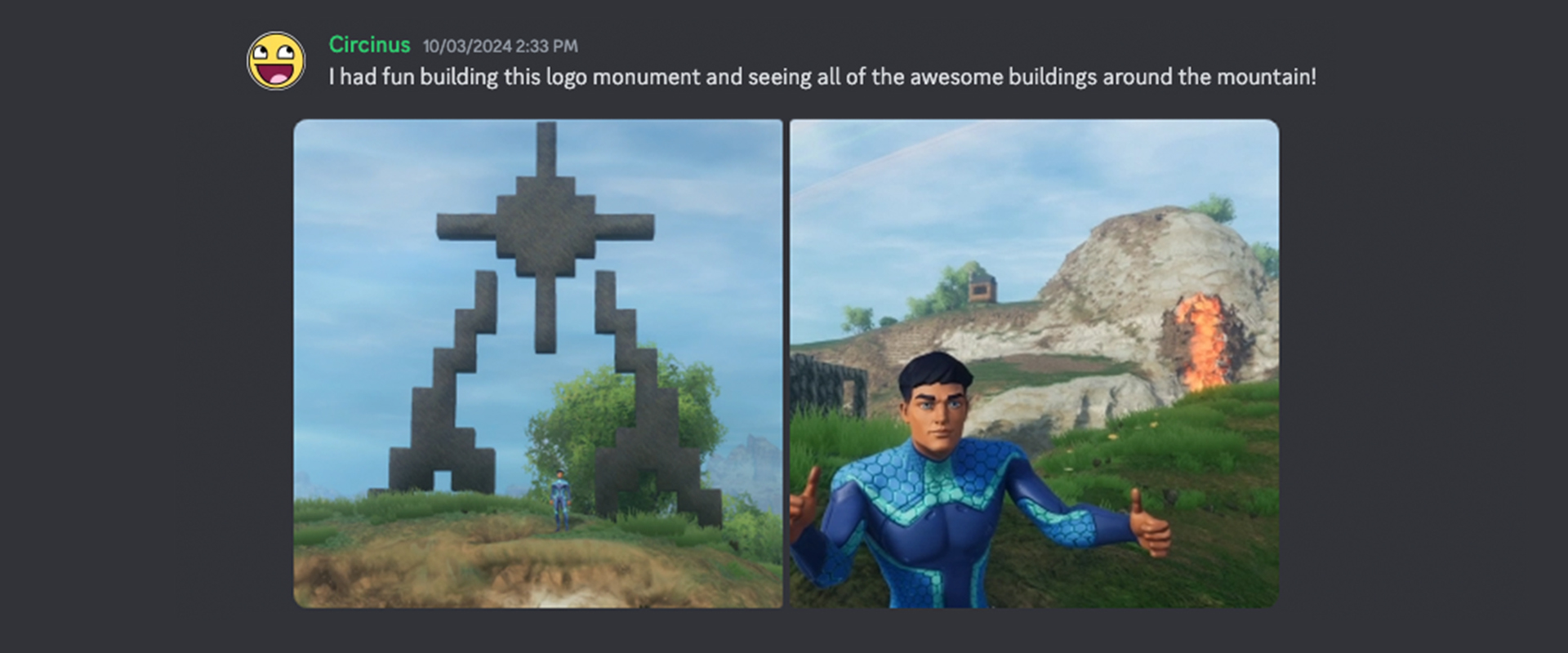
Building Stars Reach logos with the prototype block tool
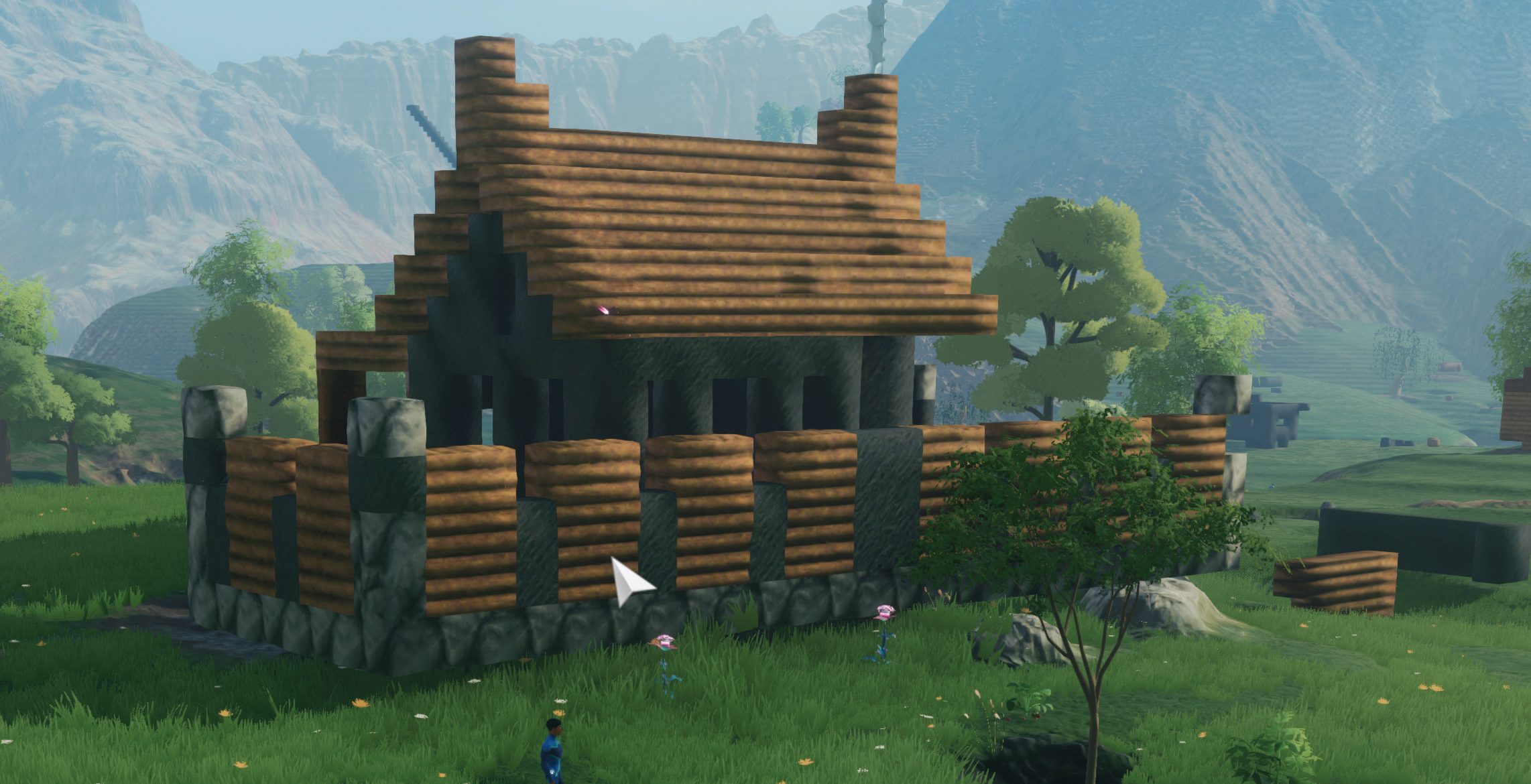 Some quick log cabins made in a few minutes during the test
Are players going to be able to do all this in the launched game? The answer is "yes and no". All the features we let the players experiment with will definitely be in the game, but all of them are gated by skill trees and may not be quite as powerful as what was seen in this test. The tools we gave them are not the final form of those tools and not every player will be able to do all of these things at once.
Additionally, block building will be heavily improved soon and they'll also have the ability to utilize building tiles and props, but that sort of building will be relegated to homesteads and colony plots, not just everywhere in the world.
But will players be able to do all of this in the launch game? You bet they will…and a lot more.
Stay tuned for details of our next test, which will unleash players into a world with a completely different set of abilities. There's so much to come, and all of it is near term!
PLAYER FEEDBACK:


-
-
STARS REACH: BREAKING NEW GROUND IN A LIVING WORLD | UNITE 2024

Stars Reach by Playable Worlds is about fulfilling the promise of what online worlds can be. In this video, you'll learn about upcoming innovations for both MMOG and virtual worlds and Unity's advantages. This thought-provoking experience draws you into a single shardless galaxy with thousands of living planets and space zones that you can explore, settle, and rule with your friends.
Via Unity
-
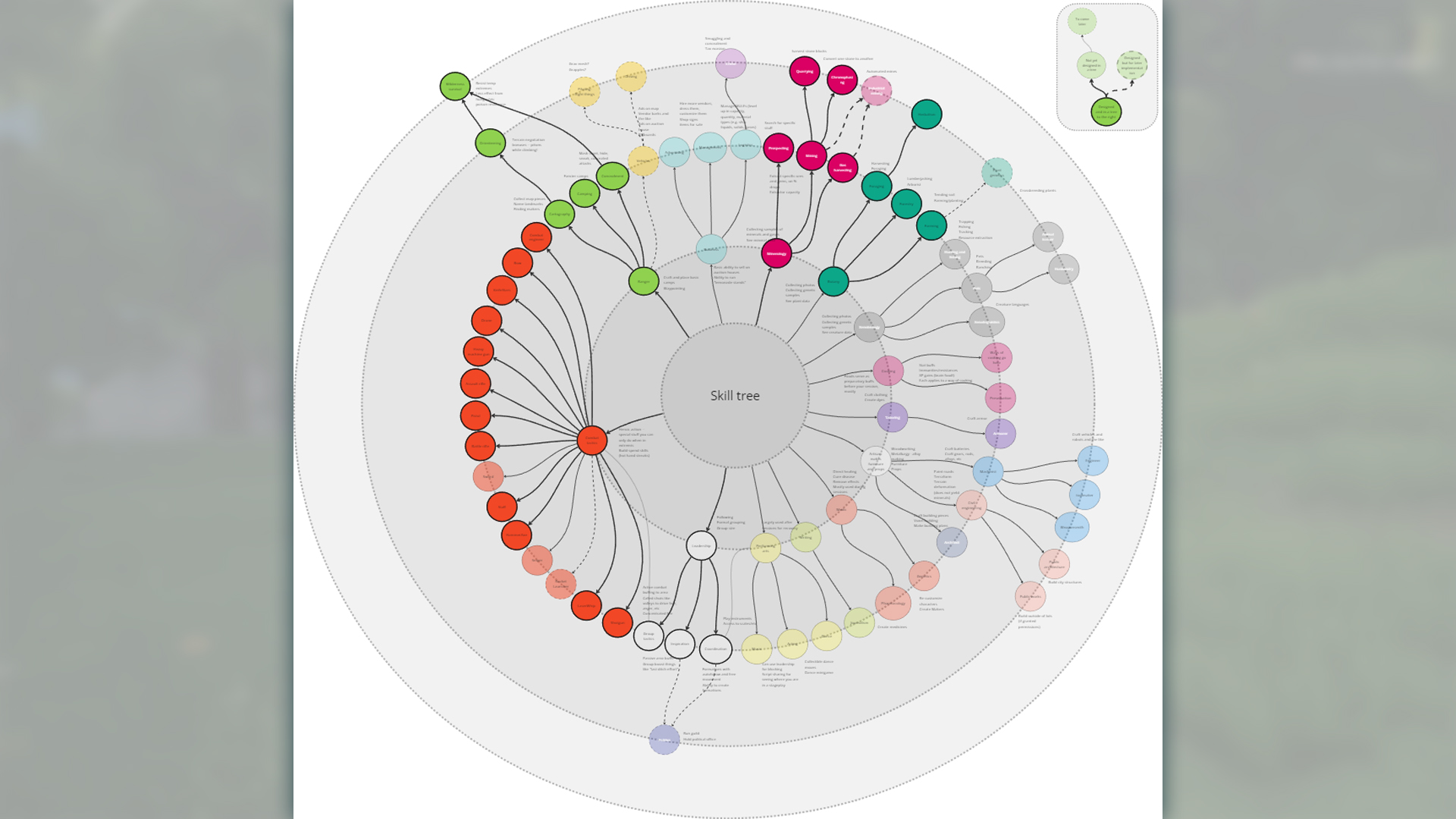
ADVANCEMENT AND SKILL TREES
By Dave Georgeson
We strongly believe there are three core elements at the heart of a great, massively social MMORPG. Fun and compelling moment-to-moment gameplay, a thriving global economy you're excited to participate in, and satisfying character advancement. These are all married together and intertwined like ivy branches. Each inseparable from the others, and all operating in mutual support. This is an incredibly hard feat to accomplish, and it's worth every ounce of the herculean effort required to make it happen.
Together, they're too big of a subject to tackle in one article, so today we're going to separate out character advancement and talk about how that works in Sterne Reichweite.
GAIN EXPERIENCE BY BEING USEFUL
One of Sterne Reichweite's core principles is that you learn by doing…but not by just blindly repeating an action over and over again. Instead, you need to do something that's useful to yourself or others, or incurs risk.
How does that translate into gameplay? Here are a few examples:
- Let's say you're learning to be a Ranger, and you learn the skill to set up temporary camps in the wilderness. Do you get XP for setting up a camp that just sits there idle? No, you don't. But you do earn XP when that camp is used by you or other players to rest or re-equip.
- Or maybe you're becoming a Weaponsmith and you start making weapons. Do you get XP from making weapons? No, but you do get XP when those weapons are actually used by you or other players. The more the weapon is used, the more XP you earn.
The same is true for entertainment (you get XP when your dancing benefits others), leadership (you get XP while actively providing benefits to squad members), xenobiology (you get XP when people use the libraries of information you create) and you gain XP with medical skills when you heal or restore other players.
Of course, some trees are more straightforward. When you train with a weapon, you get XP when you cause damage with it (which incurs risk for your character). If you learn Combat Engineering skills, you get XP when your traps or turrets are effective.
You can see the pattern here. This is about your relationship to a universe where danger exists, and how your actions impact others both directly and indirectly, all of which are critical elements in our living, thriving sandbox of a game.
SKILL TREES AND TOOLS
We have a lot of skill trees in Stars Reach and every skill tree has a tool associated with it. To gain XP in a specific skill tree, you need to use the tool associated with it.
Want to be a better miner? Use the extractor. A better leader? Use the rally banner. Get better with the assault rifle? Then use the rifle in combat.
It's a simple concept. Of course, you can't equip everything at once, so you'll have to pick which trees you're advancing at the moment by choosing the appropriate tools. And various tools have different quality levels which affect their various abilities, which again plays into economy and crafting, but the basic idea of "use tool, get XP with that tool" is an easy one to understand.
Nearly everything you can do in the game is associated with skill trees (you can do fundamental things like run and jump without unlocking skill nodes, of course), so your loadout choices will influence what your character becomes capable of doing as you play.
CAN I LEARN EVERYTHING?
Yes, and no.
Yes, you can learn every skill in the game, but no, they cannot be active all at once. There is a maximum number of skills you can keep "in practice" for your character at one time. If you want to continue to learn more skills thereafter, you'll need to first let some of your previously-learned skills atrophy and fall "out of practice."
Atrophying a skill doesn't mean you lose it. You're just out of practice and can't use the capabilities at the moment. You do retain benefits from having worked so hard the first time: If you want to dust the atrophied skills off and relearn them, it's much easier and is really just a matter of time. You don't need to learn the skill again from scratch.
WHAT DO I LEARN IN A SKILL TREE?
As you unlock nodes in a skill tree, you'll gain bonuses to your existing abilities and unlock root nodes to other trees that branch off from the one you're climbing. And you'll also unlock Specials.
Specials are new abilities that you use with the tool for that skill tree. Some examples:
- If you're pursuing the Forestry skill tree, you might learn to force trees to grow so you can replant and replenish more quickly, or automatically de-limb a tree when you cut it, or learn to cure diseases in the trees while they're growing.
- If you're learning Leadership, you can inspire your team by boosting various character stats, create formations for them to use for bonuses, or activate crowd control abilities against foes.
- If you're learning to use the Laserwhip (a weapon), you might learn to Lasso an opponent, or Laserstrike at range, or lash out and entangle a foe like a Bola.
And so on! However, there are two caveats with this:
- You can unlock many Specials on a skill tree, but you can only enable two of them at a time, and;
- The Specials you have enabled are crafted into the tool that you're using. So when you want to use different Specials, you'll need to buy or craft a different version of your tool and use that one instead.
As you can see all of this obviously intertwines with moment-to-moment gameplay as well as the economy. Every item you use in the game was made by a player, so you'll either need to learn crafting skills of your own, or you'll need to make friends with someone that has those skills. How that all works together is a much larger discussion for another day.
SO WHERE ARE WE NOW?
As with most (if not all!) fundamental gameplay systems in an MMO, we first have to build the supporting infrastructure, which is part of what we were up to when we were running quietly before announcing the game publicly.
Then we build the systems and interfaces that the gameplay teams will use to fill out the code and data that becomes the trees and abilities. Finally, the player-facing trees and abilities themselves get created and you're able to see and test them.
We're on that last step right now, and you'll be able to see the first couple skill trees very soon. Our next set of external tests will let players explore the first couple of simple skill trees, and then we'll continuously roll out new ones thereafter until we get all the intended functionality for launch into the game.
We're still pre-Alpha, so we have a good chunk of development still to do, and we'd love to hear your feedback on these core concepts! Join us in our Discord channel so we can discuss!
If you have a friend or guildmate who would enjoy this testing, please give them this link to sign up: https://signup.starsreach.com/email-cohort.
-
A REPORT FROM UNITE

This past week I was at the annual Unity developers conference called Unite 2024, where we were presenting a couple of times on our game and technology. This year it was held in Barcelona, Spain. I had never been, and it was on my bucket list of places to visit.
We work very closely with Unity. Some of our technology is right at the bleeding edge of what the engine can do, and several aspects of it, such as our simulation, are outside the game engine entirely.
Among other things we make use of their DOTS framework, and we have been able to contribute back by identifying ways in which the physics system and networking system could reach even higher performance – several of these changes are actually in the engine for everyone to use now. It feels good to be able to give back that way.
I filmed a segment for their YouTube channel, which had me in full TV make-up… no photos of that, but you'll get to see it soon I suppose! I also did a segment for their livestream which you can see right here:
Watch the whole segment [here].
There were two main presentations.. One of them was actually a joint talk with Amazon Web Services. They are another key partner of ours. We run our game servers on AWS, and work closely with them as well in order to build our unique backend.
The talk was all about how we use AWS services for our back end. Many of the lessons we wanted to share were about how we try not to reinvent the wheel, but also are very willing to dive in at the deep end of inventing new technology if it serves the game and the vision for what we are making. The talk was filmed, so I am pretty sure it will pop up publicly at some point here.
As part of this talk we showed examples of how our terrain generation system works, and described a bit of how the living world simulation works as well. We shared images like these, which show how we have built custom tools for generating the initial state of our planets before the simulation starts to run. It is all too easy for procedural stuff to generate "endless bowls of oatmeal," stuff that is technically different but starts feeling very samey.

Our designers use a node graph tool to build algorithms. These algorithms describe landscapes – not just one specific landscape, but rather the rules for building a particular sort of landscape. We can randomize parameters within those rules in order to make endless variations of that landscape type.
This keeps important stuff under designer control: canyons need to be this wide in order to keep combat fun, slopes this steep for navigability, and so on. We can put all those rules into the algorithms, and know that no matter how much we randomize in the procedural process, the rules will still be obeyed so that player fun is preserved.

The tools let us preview the way the world is going to look and tweak the rules in advance. You can see that this isn't just like regular terrain tools with heightfield generation – we have a full 3d world and simulation, and we need to know that there's a quartz deposit there under the soil, and so on. So the tools actually annotate the rules so that every cubic meter knows what materials the world is made of at that location.
When we go to generate an actual planet, we grab rulesets out of that designer-created library, and change the seed values so that we ourselves don't know what the geography we get will be – but we know that it will still fit our design criteria.

And then, there's all the wizardry to make it actually render in a gamelike way. We talked about that more in the second talk, which was on the main stage. A bit intimidating! Here's a shot of the room before it had filled up, from the stage.

This talk was meant more as an overview of everything we are doing, a chance to introduce our tech to a crowd of folks who had never heard of us before. Among other things, we shared stats about the way the world is rendered, how the simulation works, and of course, an overview of the gameplay. We talked about how we use a custom scripting solution based on Javascript for our game logic, in order to achieve MMO scalability and high levels of service reliability.

It was a busy week! But we also got to meet several possible new technical partners, spend time connecting with our existing ones, and eat a lot of really great food in Barcelona. I had enough spare time to see La Sagrada Familia, and Sant Pau, and visit the old city.
I hear from the Unity folks that our main stage talk should be released as a video at some point here – we'll be sure to share that once it's available!
-
WORLD MANIPULATION PLAYTEST: TEARIN' UP THE TERRAIN!

by Light Bates
Hey Folks! Last month we had our first playtest where players could run, grapple, jump, grav-mesh, climb, dance, and more. This was a great way to kick off our external playtests and players had a great time, however through all of these movement tests their toolbelts were empty and their backpacks barren. But no more! We've talked about the simulation that drives our living world before, and it was time to give players some tools to test it out themselves.
Our goal with this playtest was to test out World Simulation, both from a design perspective and from a technical one. On the design side, we wanted to see how long it takes for a world to look less like a tropical landscape and more like swiss cheese. And on the technical side, how well would the simulation keep up with two hours of constant mayhem all across the map?
Spoilers: If you give nearly 100 players a suite of terraforming tools, they can carve up a planet pretty good.

Before
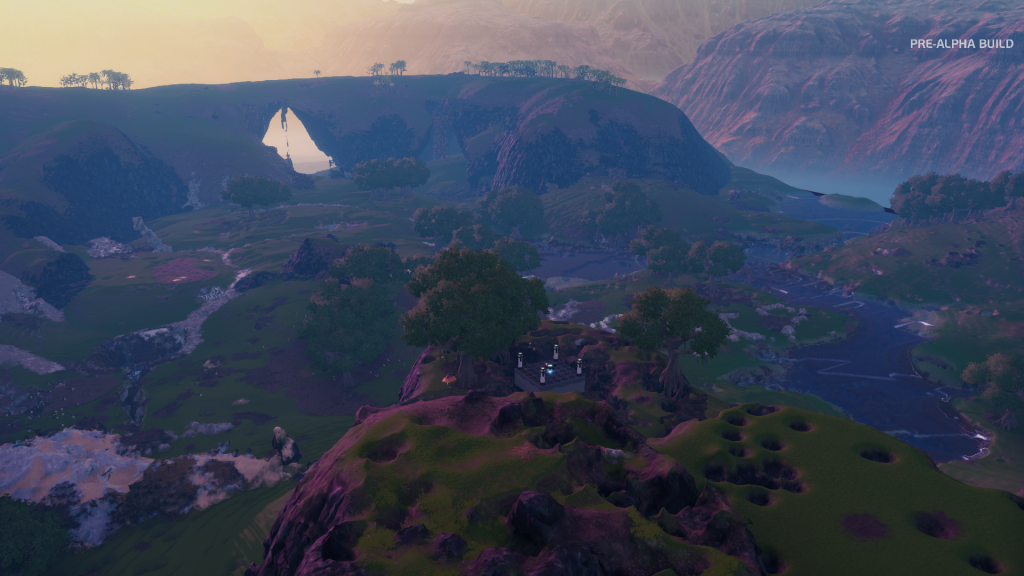
After
The first thing players did was, predictably, begin to dig. The world already had some existing caves, but within minutes of the playtest starting there were new winding tunnels carved into the sides of mountains, pits driving straight down in an attempt to quickly find bedrock, and divots across the landscape as wandering players periodically fired their mining tools "just to make sure it still works." And as they dug, their backpacks began to fill with the resources they found. At first mostly dirt and shale, but as they tunneled some players began to find veins of marble, ruby, silver, and sapphire.

While the Diggy-Hole inclined continued delving greedily and deep, other players started testing out some of the other tools at their disposal. Cliff faces began to glow with heat and then ooze downward as molten stone, and frozen paths crept across rivers before melting back to water behind those that slid along them.
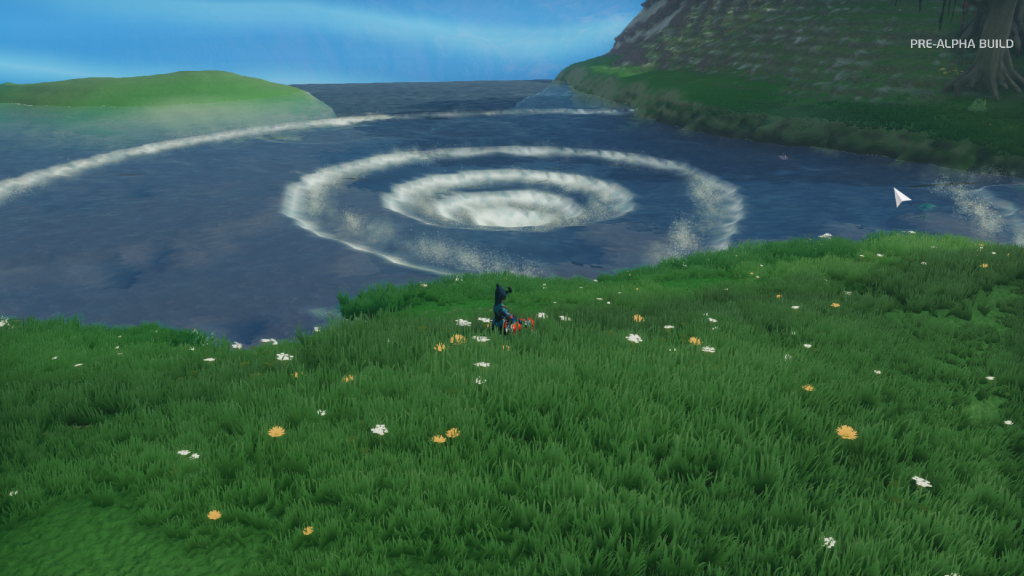
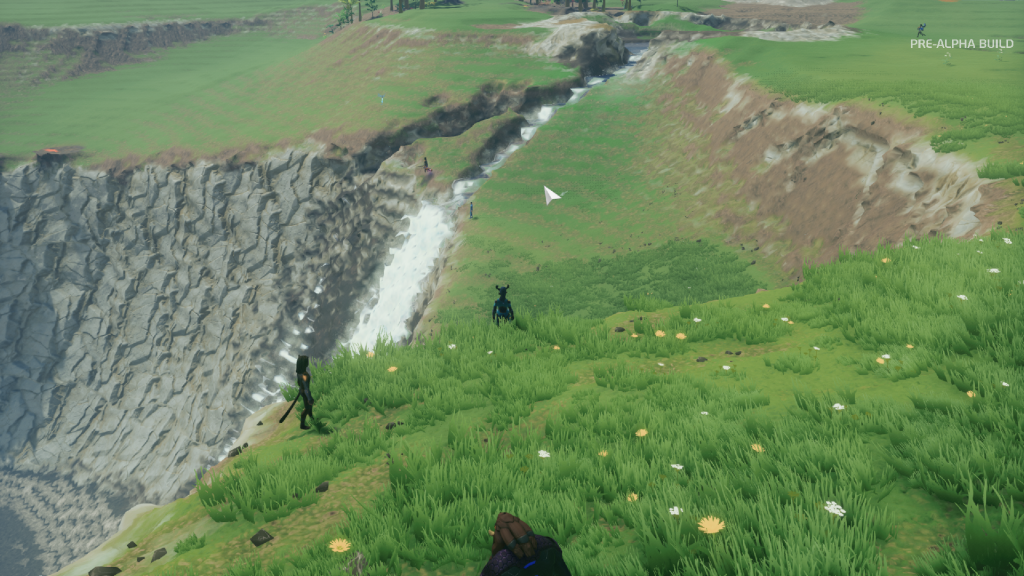
As the test continued, more complicated interactions started to emerge. A whirlpool formed in one of the ponds as a player dug a hole into the seabed, while a separate pond was converted into a waterfall thanks to a player-made trench.
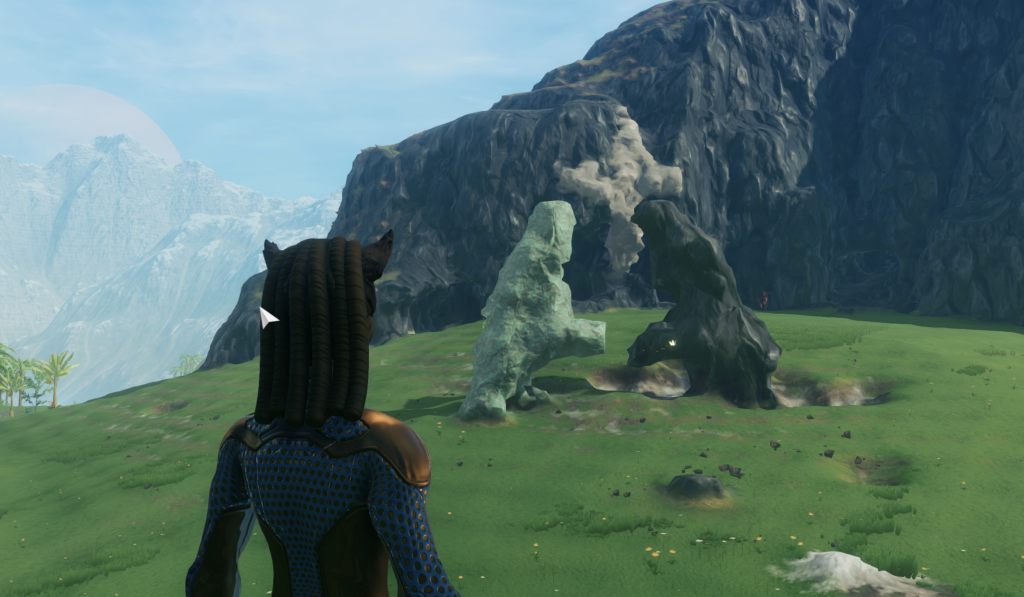
With backpacks slowly filling from the rampant destruction, some players were drawn to the tools that allowed them to place these resources back into the world. The Terraforming Tools they equipped aren't known for their precision (an elegant building tool for a more civilized playtest may be around the corner…), but player creations began to spring up across the landscape nonetheless. A marble giant was carefully molded into creation, pillars of shale stretched into the sky, stone letters and statues appeared on mountain tops, and one player decided to use some clever perspective to sculpt out the Stars Reach logo (what a flatterer!)


It wasn't all smooth sailing. One of our goals was to test how well the simulation would handle the stress, and while the simulation held up pretty well the tools themselves had much more of an impact on the server than we'd expected, creating some nasty lag. This is the way the world ends, not with bang but with the roar of 80 simultaneous extractor beams.
Fortunately, we were able to identify the problem pretty quickly and you can bet it's a set of improvements that we're working on now. For those of you who've signed up to playtest but haven't gotten an invite or key yet, know that those kinds of issues are why we're passing out Steam keys slowly, so please be patient with us! And if you haven't signed up to playtest yet it's not too late to do so!
Despite the lag, most players still had a blast and played throughout the full two hours (and would have played longer had we let them). You don't have to take our word for it, though! As our testing pool grows and playtests progress, we're encouraging playtesters to share more about their experiences, so feel free to ask around in the Stars Reach Discord!
We've got more playtests planned, so stay tuned!
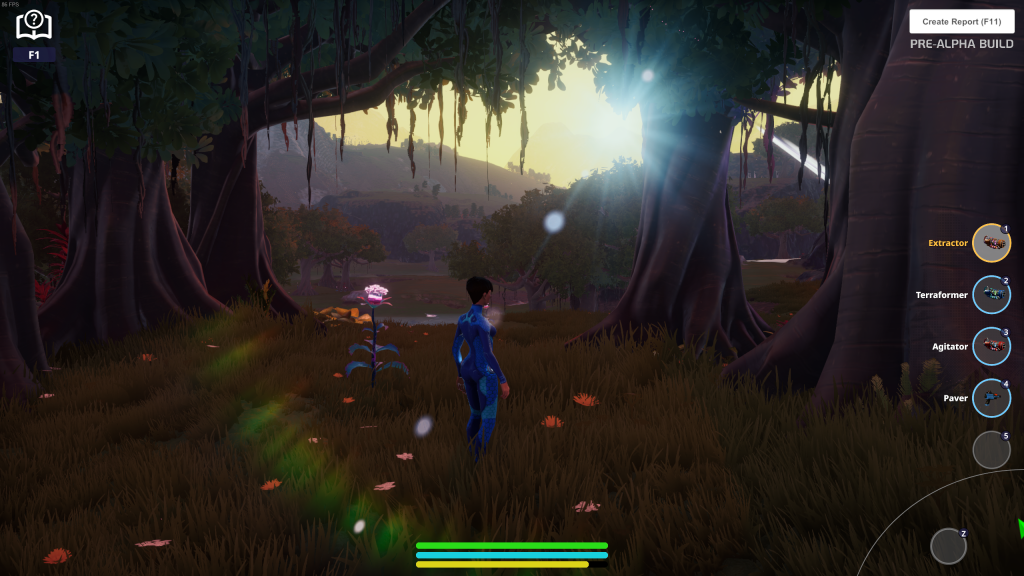
-
AN UPDATE ON VISUALS!

von Raph Koster
When we announced Sterne Reichweite, the art style and visuals were not yet as far along as the gameplay, the cloud technology, and the simulation. Visual improvements were planned for later in the schedule, starting with this month's pre-alpha testing.
This gave us a challenge: Our development plan calls for early input from player-testers. Waiting for near-final visuals would have meant player input coming too late in the process to help us scale the servers and improve the game. So we cut a trailer with the imagery we had available, giving players a general sense of what the game was. We did receive some criticism on the visuals of the trailer.
Well, we have made great progress and some of that is visible now. We've improved the lighting, increased detail levels, added functionality to and enhanced the simulation, and much more. We still have more work to do, especially on characters; in the meantime, we're sharing some video and screenshots that show how the game looks today. As you can see, we incorporated some of your criticism into the new appearance.
Expect more visual updates before this game reaches beta phase, but even now we can begin to show you a combination of art and technology that approaches our intended finished look.
A lot of work went into adjusting the lighting in the game. In modern videogames, light interacts with the shaders that are on all the objects. Texture detail might be present but basically invisible unless the lighting is set up correctly.
We did a general pass on tons of objects throughout the game to make sure that shaders were set up correctly, and then built a new day/night cycle for it all. Contrast and saturation were adjusted and balanced out to be closer to the look we are aiming for.
We also finished off some capabilities of those shaders that you haven't seen before. You may already know that our simulated world has temperature and humidity for every cubic meter, and that the grass reacts. Well, now the grass actually stays burned and trees blacken, when set on fire. They also ice over. So do the rocks, the bushes… everything.
Simulation detail also increased, and that brings with it visual detail. In those older videos, we only had about a dozen sorts of materials in the world – one or two sorts of rock, one kind of dirt, and so on. We now have ten times as many as we used to – and they all behave differently! They melt and freeze at different points, they have different densities, and they slump and fall differently because they have different adhesion characteristics.
This turned out to be a huge difference in the look of the world. Minor details like sand always sliding down, or bare dirt being more susceptible to giving way than dirt held together with grass roots, add visual touches that powerfully echo what we see in reality.
 Before…
 Along the way…
Where we are now…
Along the way…
Where we are now…We also implemented all the chemical reactions between different materials. Suddenly the simulation was doing worldbuilding for us! The bottom of stone riverbeds eroded away into sand and clay. Dirt embankments turned muddy and were swept away. Dirt on slopes too steep to hold it slid off, and the sides of mountains that used to be bare gained pockets of greenery all over anywhere that plants could cling to life.
The best part of all this was how it showed up when players were modifying the world. Dig a tunnel, let water in, and you can just watch as unexpected color and detail shows up – whether it's algae or moss on a rock face, or soil rounding off the landscape, stuff just looks more like you expect it to, but still in that painterly, welcoming style we were aiming for.
We still have plenty more work to do – character customization is well along but not yet visible, and work continues on that. And of course, upgrading the terrain rendering means that soon we will need to revisit the grasses, and so on. It's a never ending quest to make it all look better and cohere. We are solving rendering issues that other games simply don't face, and we will probably be working on the look and the art right up to the very last minute. Thanks for coming along on the ride!
(Oh, who am I kidding? It's an MMO. We're definitely going to keep going after the last minute! Haha.)
-
STARS REACH MOVEMENT VLOG

In this devblog, Raph explains the in's and out's of the Stars Reach camera and movement systems. All of these systems are things our testers got to try out in our most recent playtests.
Check out some excerpts from our most recent test, courtesy of Alimber.
-
MOVEMENT AND CAMERA
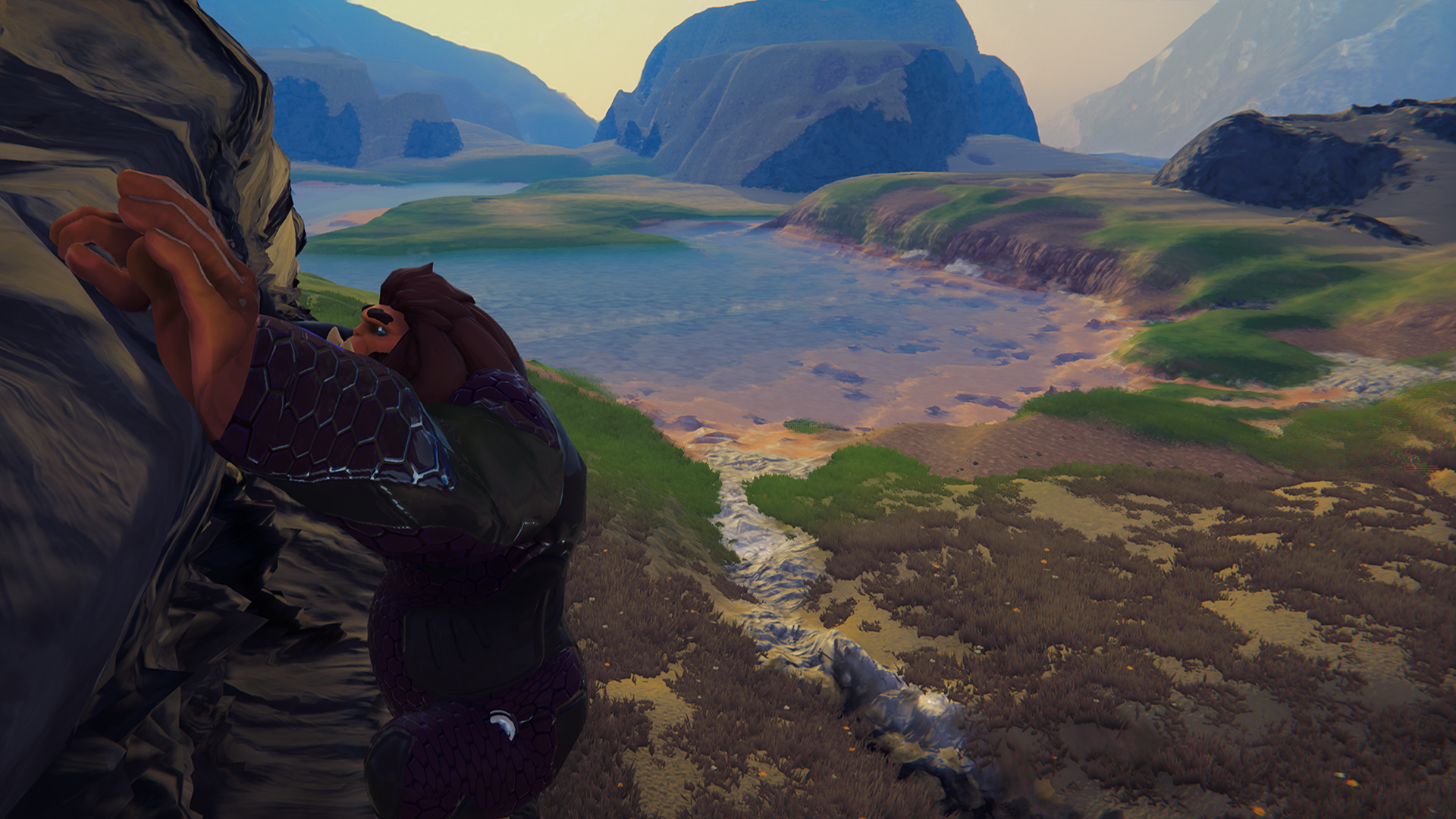
You may have seen last week that we have started the limited pre-alpha testing for Stars Reach. It's exciting times – we've had outsiders play the game before, of course, but it was mostly investors and partners of the company. This is the first time that real players have gotten to play!
(Yay!)
We had most of the game turned off though.
(Boo!)
That's because in these early stages of testing, we are really looking at two separate but equally valid purposes. For us internally, it's a chance to baseline look at a lot of basic systems. Like, can you log in? Does it run at all? When does it keel over? Did our Steam key invite process work?
We couldn't just have players log in, see an empty screen, and leave bored, though. So we gave them just two of the most fundamental systems to play with: movement and chat. Both of these are things that players spend enormous amounts of time doing. Any friction or lack of polish is something that they will run into over and over again, and it will be like coarse sandpaper on their play experience. So it's really important to spend a lot of time polishing them.
I thought that today I'd spend time talking about movement and the camera.
CAMERA
We have been working on basic movement for a very long time. And you can't really work on movement without also tackling the game camera.

We support two camera modes, which our research showed were both widely used by MMO players.
Free cursor: In one of them you can move your cursor freely around the screen, aim anywhere, or click on interface elements on your HUD. If you want to move the camera, you hold down the right mouse button and drag it around. Using WASD to move moves you relative to the camera.
Fixed reticle: In the other, you use mouselook. There is a reticle slightly offset from your right shoulder (so you can see what you are aiming at). WASD moves you just like it does in a typical first or 3rd person shooter.
When we say that we are partly inspired by twin stick shooters, what we mean is that you can be moving in one direction while actively firing in another, with the camera parked somewhere that isn't directly behind you.
In both, we let you zoom in and out quite a lot. We wanted to avoid having different camera modes for when you were building versus fighting and so on, and instead give players the choice to put the camera where it suits them for the specific thing they are engaging in. Some things you do in the game definitely lend themselves to being zoomed out, and in free cursor mode – like building, and some climbing scenarios. Others, like aiming a weapon precisely, really do better at closer zooms with mouselook on.

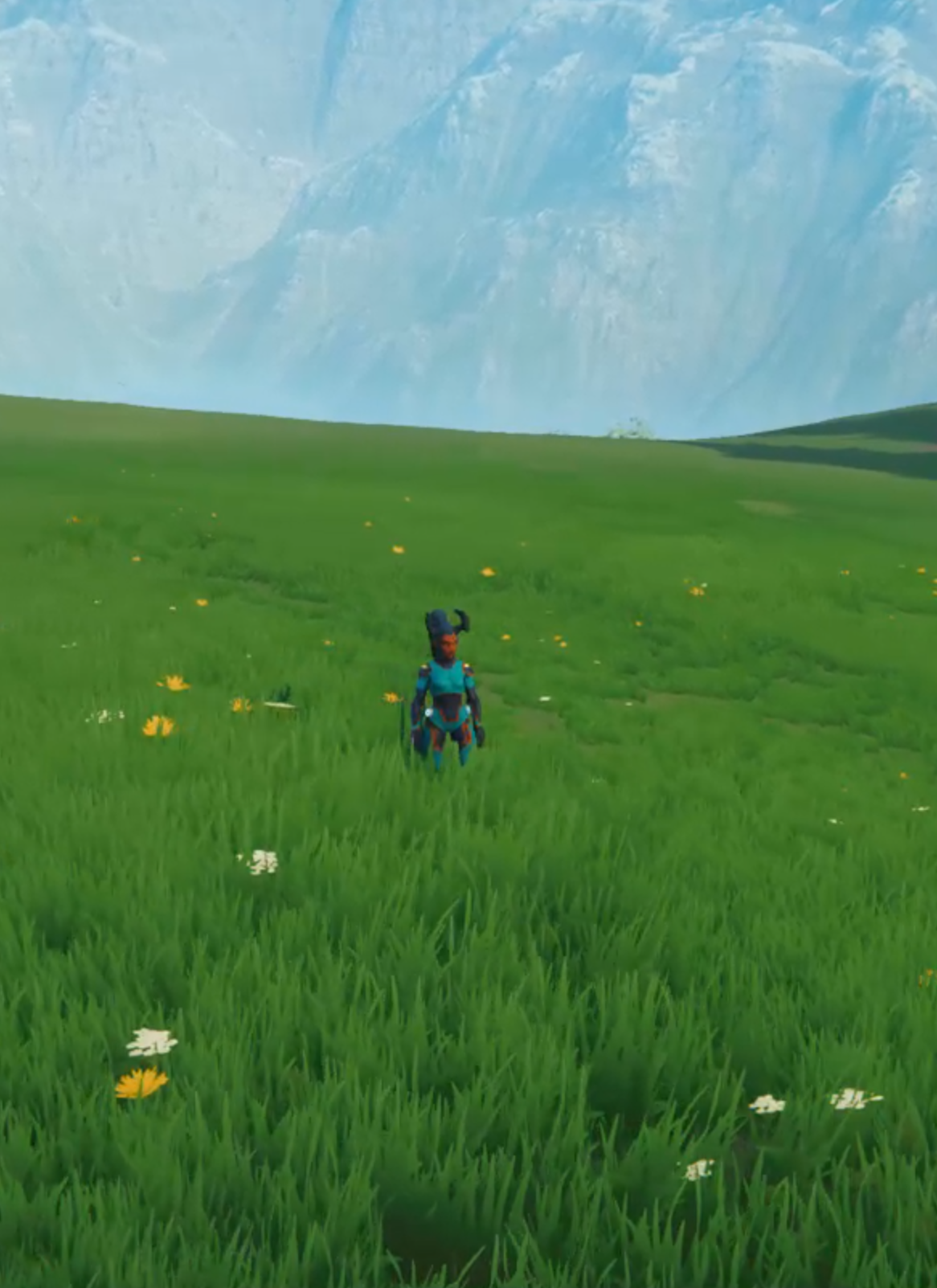
You currently toggle unholstering using the G key. The behavior of WASD actually changes a bit based on whether or not you have a tool out. We automatically change you from a "strafing" style behavior to running around more freely. It's the kind of little thing that you want players to not really even notice, and instead take for granted that it "just works."
Even on our team, we find that different teammates have pretty strong preferences about these two camera modes and how much time they spend in one versus another.
MOVEMENT
We tested out movement pretty extensively using a custom built "jungle gym" level that had a wide array of jumping, flying, and climbing challenges. It offered a range of slopes, a series of jumping puzzles, moving platforms, and two timed challenges we built in so that we could make tweaks to the systems, and then try running the obstacle courses. One of them was for ground locomotion, and the other was for jetpack usage.

We had a lot of customizable movement options in this prototype. We tried out camera modes, we tried strafing variations, and so on. Every parameter was tweakable, and we just tried everything until we converged in on what we liked.
We used this testbed to try out both camera modes, basic combat, how the camera handled enclosed spaces, and much more. Spending many hours in here paid off when our testers first tried out the game.
We always knew we would want to support fun traversal. Our planets are generated using procedural techniques, and they are also modifiable in runtime. This means that the tricks you use for statically created terrain just won't work. We also can't guarantee that the map is all navigable – just like the real world isn't all walkable. So we decided pretty early on we had to support climbing and flying, so that players could get themselves out of trouble.
Every time we improved the visuals of the terrain, we would find ourselves wrestling with challenges around the avatar poking through the ground, or actually managing to fall through the world. To be honest, we are still wrestling with this last problem, because we keep adding ways to change the world on the fly!
At first flying was more like straight up antigrav flight, but we kept going back to the idea that it ought to feel more like Joust and jetpacks, so that there was more of a skill ceiling to it.
We supported hanging for a really long time. But the more we played with it, the less we liked it. It was very challenging to get it to work well when we went around vertical edges. And then every time we jumped in a cave, or flew in a tight space, we found ourselves dangling from the ceiling. Finally, we cut it in frustration, because it was more annoying than useful. Maybe someday it will make a comeback.

We also tested having movement affected by terrain really early on. Just simple slowing you down as you moved up slopes. This is still in there. But as we made the environment more realistic, we came to realize that we would need to handle far more cases than we had originally expected. Moving through muddy ground can affect your movement, for example. Even moving through taller grass versus terrains that are more barren can have varying effects. And some of these can add real gameplay. There's value in having tall grass affect your movement if it means players are therefore incentivized to build roads to move goods across the map.
One of our favorites was that icy terrains become slippery. We promptly added a new sliding animation that we hadn't originally planned for.
Speaking of slippery – we did have sliding down slopes too, but we have turned it off for now, as frankly, we kept dying when we got too close to the edge of cliffs and slid off! You do take falling damage in Sterne Reichweite, you see. Flying requires stamina, so does climbing, and falling from a great height is most definitely fatal. For a little while, you left a crater when you hit…
 Movement modifiers on varying terrain are also something that we can have affected by skills – hiking, climbing, and the like can affect your footing. We haven't yet done swimming, but wading in the water does affect your movement already. When we get to doing underwater movement, we will be drawing a lot of lessons from how we did spaceflight, and probably even share a lot of the controls.
One of the things that our testers responded to most positively in the test was grappling. This was a relatively late addition to the movement system, and one that we have had to be very careful about not feature creeping into something huge. After all, entire games have been built out of basically just a grappling mechanic.
It's taken a lot of work to make grappling work cleanly, and we continue to tweak it now, but it's pretty fun to repeat grapple while in mid air, getting tugged to one cliff wall versus another. Originally, we had grappling work only when you used a grapple gun. But it was so fun it is currently a base movement capability that all avatars get.
There's lots more I haven't touched on. You can press a key to go into walking. I know, nobody does that, everyone wants to run everywhere. Well, there's sprinting too. It costs stamina. So do dodge rolls, which you can do in any direction, mostly to evade enemy fire in combat. I will skip talking about movement in space, since it's its own whole topic.
We made a few tweaks after the first test, and are about to run more or less the same test again with more people this weekend. If you're interested in testing, do sign up on the site! We let in another cohort just yesterday, for this weekend's test. We are also sharing tidbits like sneak peeks of our upcoming visual upgrades, and regular leaks of game features, over on the Discord.
Sterne Reichweitestarsreachteam2024-05-30T13:05:17-07:00


